Driving through the bustling streets of Sanford, FL, with its mix of historic charm and modern traffic, requires vehicles in top condition—especially your brakes. As a Sanford resident, you know how unpredictable the roads can be, from navigating I-4 to the scenic routes around Lake Monroe. But what happens when your brakes start failing? Ignoring subtle warning signs can lead to dangerous situations, costly repairs, or worse. At Sanford Auto Repair & Service, we’ve seen it all, and we’re here to help you stay safe.
In this guide, we’ll explore five critical signs that your brakes need immediate attention. Whether you’re cruising down historic Sanford Avenue or heading to a local event, recognizing these indicators can prevent accidents and keep your family safe. Plus, we’ll share practical tips tailored to our sunny Florida climate and the unique driving demands of Central Florida. If you’re due for routine maintenance, consider our oil change service to ensure your entire vehicle performs optimally.
Why Brakes Matter More in Sanford’s Driving Conditions
Sanford’s humid subtropical climate and frequent rain showers can accelerate brake wear. Wet roads from afternoon thunderstorms make stopping distances longer, putting extra stress on your braking system. Combine that with the stop-and-go traffic near popular spots like the Sanford Riverwalk, and it’s no wonder brake issues are common here.
Regular brake inspections are essential, especially if you drive to nearby areas like Lake Mary, where the mix of suburban roads and highways demands reliable stopping power. At Sanford Auto Repair & Service, our ASE-certified technicians use state-of-the-art diagnostic tools to catch problems early, saving you time and money.
The Role of Heat and Humidity in Brake Degradation
Florida’s heat doesn’t just affect your AC—it bakes your brake components, causing them to expand and contract repeatedly. This thermal stress can lead to warping rotors and uneven pad wear. In Sanford, where summer temperatures often exceed 90°F, proactive care is key. Schedule a brake check during your next service visit to avoid surprises.
Sign 1: Squealing or Grinding Noises When Braking
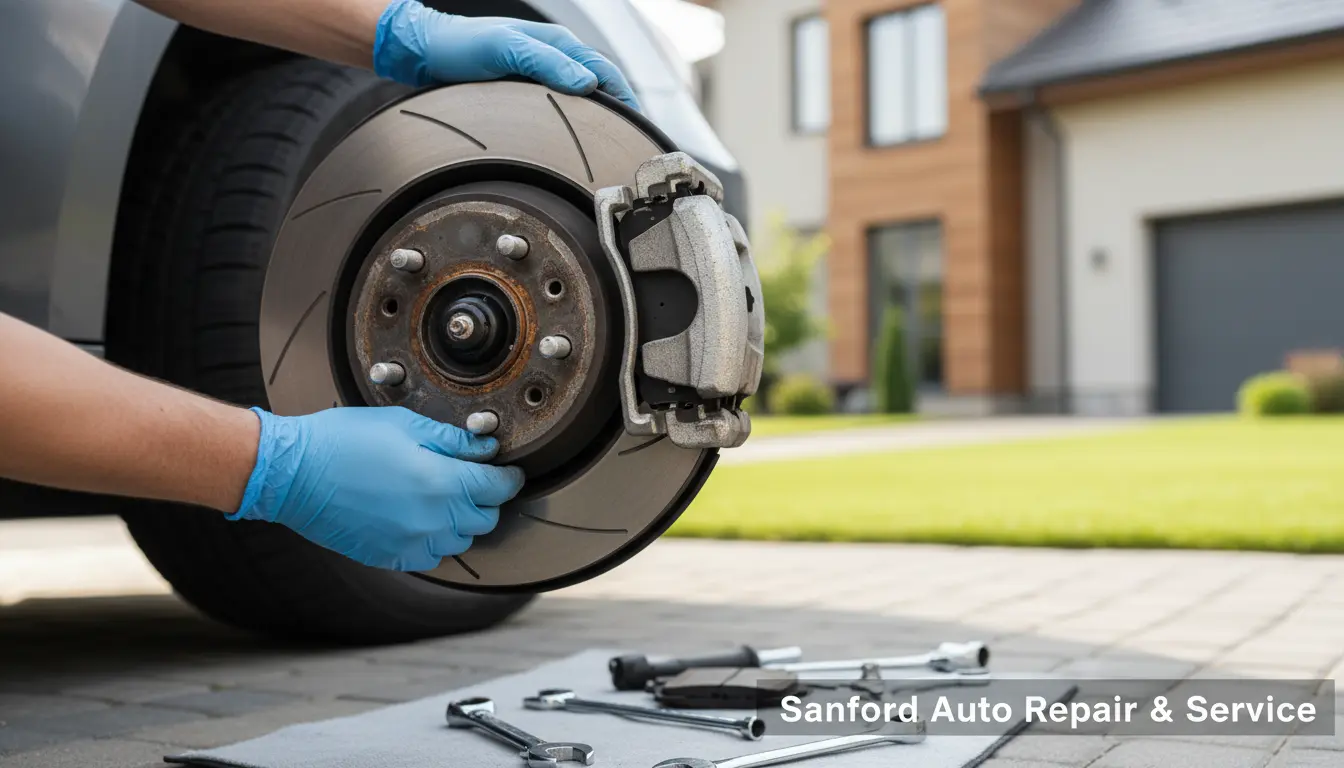
One of the most unmistakable signs your brakes need repair is unusual noises. If you hear a high-pitched squeal when you press the brake pedal, it could be your brake pads wearing thin. Modern pads often have built-in wear indicators—metal tabs that scrape against the rotor to alert you.
Grinding sounds are more alarming; they suggest metal-on-metal contact, meaning your pads are gone, and the rotors are taking damage. In Sanford’s dusty environment, debris can exacerbate this issue, embedding particles into your brakes.
What to Do If You Hear Noises
Don’t ignore it—pull over safely and inspect if possible. For Sanford drivers, this is especially urgent during rainy seasons when hydroplaning risks increase. Bring your vehicle to Sanford Auto Repair & Service for a free brake inspection. Our team can replace pads and resurface rotors efficiently, often same-day.
Practical tip: Test your brakes at low speeds in a safe area, like an empty parking lot near the Sanford Airport. If noises persist, avoid highways like SR-417 until checked.
Sign 2: Vibrations or Pulsing in the Brake Pedal
Feeling a vibration through the brake pedal when stopping? This pulsating sensation often points to warped rotors. Heat from frequent braking—common in Sanford’s traffic-heavy areas like 17-92—can cause rotors to bend, leading to uneven contact with the pads.
This issue isn’t just annoying; it reduces braking efficiency, which is dangerous on slick roads after a Sanford downpour.
Diagnosing and Fixing Vibrations
At our shop, we use precision lathes to turn rotors or recommend replacements if damage is severe. Pair this with a full alignment check to ensure even wear. If you’re in the Lake Mary area, our mobile diagnostics can come to you for convenience.
Actionable advice: Monitor your pedal feel during daily commutes. If vibrations worsen under heavy braking, like merging onto I-4, prioritize a visit. Regular maintenance, including tire rotations, helps distribute stress evenly—ask about bundling with our oil change service.
Sign 3: Longer Stopping Distances
If it takes more effort or distance to stop your vehicle, your brakes are likely compromised. Worn pads, low fluid, or air in the lines can all contribute. In Sanford, where school zones and pedestrian areas abound, this sign demands immediate action.
Test it: From 30 mph, how many feet does it take to stop? If it’s more than usual, don’t delay.
Preventing Extended Stopping Times
Flush your brake fluid every two years, as Florida’s heat breaks it down faster. Our experts at Sanford Auto Repair & Service recommend synthetic fluids for better performance in humid conditions. For drivers serving the Lake Mary community, we offer extended warranties on brake fluid services.
Tip: Practice defensive driving by increasing following distances, especially on wet Sanford streets. Combine this with annual inspections to catch fluid issues early.
Sign 4: Brake Pedal Sinking to the Floor
A spongy or sinking brake pedal indicates a hydraulic problem, like a leak in the lines or failing master cylinder. This is rare but critical—your brakes rely on fluid pressure for power.
In Sanford’s variable weather, corrosion from road salt (even if minimal) can weaken components over time.
Steps for a Soft Pedal
Bleed the system promptly to remove air bubbles. If leaks are present, replace hoses immediately. Visit us for a pressure test; we handle everything from ABS modules to caliper rebuilds.
Practical advice: Pump the pedal before driving—if it firms up but sinks again, head straight to a shop. For peace of mind, integrate this check into your routine vehicle health assessment.
Sign 5: Dashboard Warning Light or Burning Smell
That red brake light on your dash isn’t just a suggestion—it’s a warning. It could signal low fluid, worn pads, or electronic faults in the ABS system. A burning smell after hard braking? Overheated components are at play, often from dragging brakes.
Sanford’s hilly terrains around the St. Johns River can cause this during descents.
Interpreting Warning Lights
Don’t reset it yourself; get a professional scan. At Sanford Auto Repair & Service, our OBD-II tools pinpoint issues quickly. If you’re near Lake Mary, our shuttle service lets you explore while we work.
Tip: Note when the light appears—wet conditions? Heat? This info helps our techs diagnose faster. Always carry emergency numbers, but prevention beats cure.
Practical Tips for Brake Maintenance in Sanford
To extend your brake life in our local climate:
- Inspect pads every 6,000 miles or during oil changes.
- Avoid riding the brakes on long descents, like those near the Sanford Marina.
- Use quality parts suited for Florida humidity— we stock OEM and aftermarket options.
- Teach family members to recognize signs, especially young drivers on Sanford’s roads.
For comprehensive care, explore our brake repair services or tire services to complement your brakes.
FAQ: Common Questions About Brake Repairs in Sanford
How Often Should I Get My Brakes Inspected in Sanford, FL?
We recommend inspections every 6 months or 6,000 miles, more frequently if you tow or drive in heavy traffic like around the Sanford Civic Center.
What Causes Brakes to Wear Out Faster in Florida?
Heat, humidity, and rain accelerate wear. Sanford’s conditions mean pads might last 30,000-50,000 miles, but check sooner.
Can I Drive with Brake Warning Signs?
Only in emergencies—towing your vehicle is safer. Contact Sanford Auto Repair & Service for roadside assistance.
How Much Does Brake Repair Cost in Sanford?
Pad replacements start at $200; full jobs vary. We offer free estimates and financing options.
Do You Serve Areas Beyond Sanford, Like Lake Mary?
Yes! We proudly serve Lake Mary and surrounding communities with the same expert care.
Conclusion: Prioritize Your Safety with Expert Brake Care
Your brakes are the heart of your vehicle’s safety system, and in Sanford, FL, where every drive counts, neglecting them isn’t an option. By watching for these five signs—squealing noises, vibrations, longer stops, sinking pedals, and warning lights—you can act before it’s too late. At Sanford Auto Repair & Service, we’re committed to keeping Central Florida drivers safe with honest, efficient repairs.
Don’t wait for a close call on Sanford’s roads. Schedule your brake inspection today by calling us or booking online. Drive confidently—your peace of mind starts here.