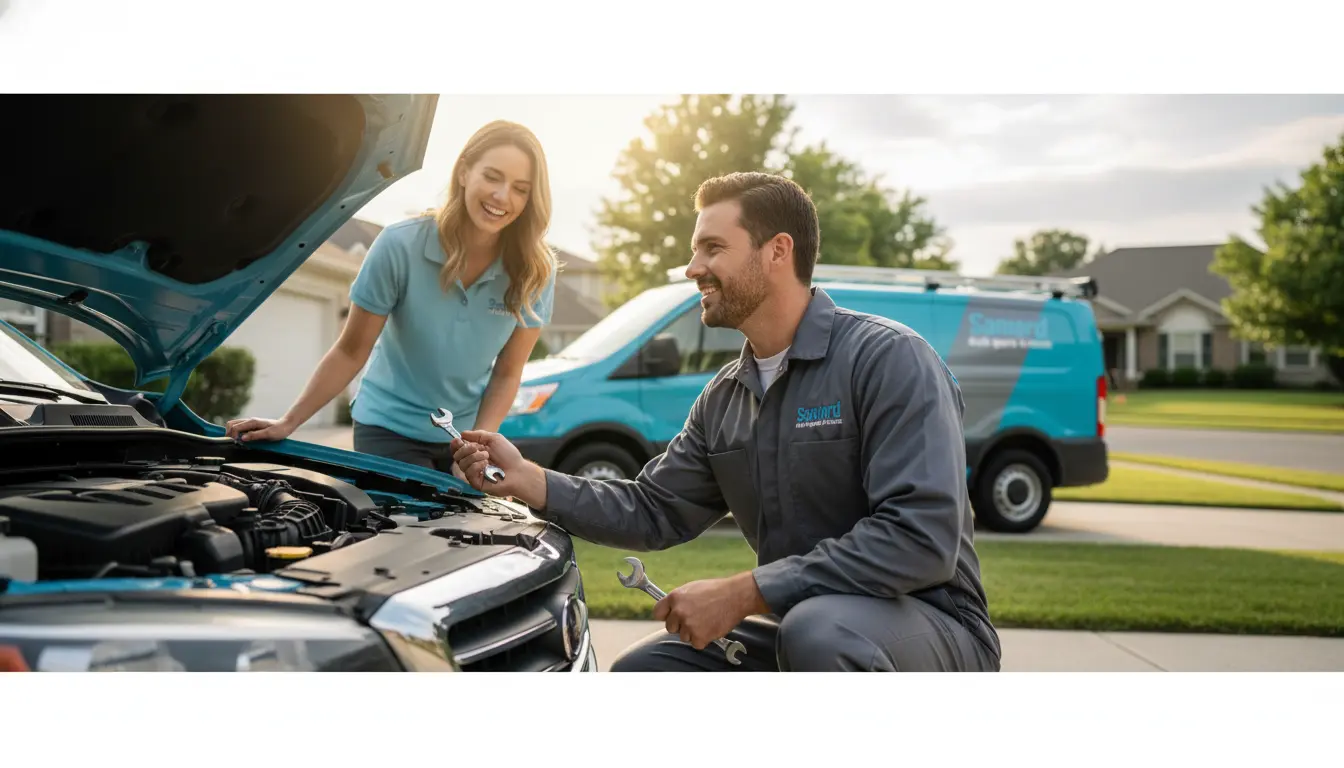
Sustained thermal stress loops generated across Central Florida highways drastically accelerate lubricant breakdown and compromise vehicular cooling efficiency. Operating internal combustion systems under high ambient humidity profiles without methodical fluid tracking ensures premature core wear. Implementing structured diagnostic validations isolates subsurface restriction faults before they trigger catastrophic engine block failures.
Deconstructing Hydro-Fluid Degradation and Radiator Clogging Loops
Accumulating core calcification and spent rust inhibitors inside radiator channels restricts normal heat transfer pathways, causing sudden cylinder head shifting. At Sanford Auto Repair & Service, our technicians clear internal blockages using specialized chemical flushes to return the cooling network to its original factory operating metrics. Fleet managers aiming to analyze chronic local diagnostic faults or trace engine warning behaviors can view our 2026 data analysis on common car problems in Sanford.
High local humidity speeds up water contamination inside complex internal fluid structures, altering standard viscosity protection limits and increasing friction loading. Utilizing advanced full synthetic engine lubricants shields vital bearing clearances, providing immense thermal stability during extended stop-and-go highway idle cycles. Car owners looking to map structured factory maintenance routines or analyze essential protection parameters can view our briefing index on the importance of regular maintenance.
Quantifying Kinematic Viscosity Demands and Thermal Film Breakdown
Maintaining stable oil shear properties under extreme ambient heat blocks micro-friction pathways from carving raw tracks into internal cylinder walls. Premium synthetic fluids maintain cohesive protection boundaries far better than mineral oils, keeping necessary additive chemistry in active suspension under heavy engine loads. Motorists facing sudden secondary road failures or needing immediate diagnostic checks can inspect our localized breakdown blueprint on emergency repairs.
Isolating Vacuum Infiltration Flows and Internal Gear Housing Scaling
Unmetered atmospheric air breaching weathered intake manifold seals alters engineered fuel-to-air parameters, forcing the control module to inject excessive fuel and raising catalytic exhaust valve temperatures. Vehicle owners must address minor vacuum line splits immediately to block cascading powertrain fatigue and avoid recurring dashboard error codes. Business managers looking to organize multi-vehicle facility layouts or compare workspace setups can consult our commercial overview at top 10 handyman services for Pompano Beach homes to coordinate bay logistics.
Traversing deep standing water pools from tropical downpours can submerge low-hanging gearbox vent paths, drawing external moisture straight into internal gear housings. This fluid contamination thins out gear oil boundaries, causing rapid bearing pitting and requiring comprehensive system flushes. Vehicle owners seeking to track early circuit leakage patterns or locate hidden fluid pooling markers can check our electrical troubleshooting guide on 7 signs its time for electrical repairs in your home.
Enforcing Eco-Responsible Containment and Fleet Safety Benchmarks
Sanford Auto Repair & Service completes all powertrain flushes, lubrication swaps, and diagnostic scans in absolute alignment with strict environmental regulations. We implement advanced fluid isolation methods and trap volatile automotive refrigerants with EPA-certified recovery machinery to fully protect local water tables from chemical contamination. Adhering to these high operational standards maintains vehicle driving reliability while actively protecting local ecosystem health metrics.
Frequently Asked Questions (FAQs)
Glycol-based brake fluids are naturally hygroscopic, meaning they pull water vapor directly from the surrounding air. High ambient moisture saturation lowers the liquid’s boiling point, leading to hydraulic vapor locks and a spongy pedal feel during hard braking cycles.
Crystalline scale accumulations coat the internal coolant pathways, forming an insulating barrier over hot metal surfaces. This scale restriction slows heat transfer to the passing coolant fluid, creating localized thermal pockets that crack cast heads.
Vacuum leaks introduce unmetered oxygen into the combustion chambers, throwing off the stoichiometric air-fuel balance. The engine management computer attempts to compensate by increasing fuel delivery, which raises exhaust gas temperatures and stresses catalytic converters.
Conventional mineral oils contain uneven molecular structures that break apart and vaporize at lower thermal thresholds. Full synthetic oils feature robust, uniform molecular links that resist heat breakdown and maintain viscosity up to four hundred degrees Fahrenheit.
When a hot differential housing hits cold standing water, the rapid temperature drop creates an internal vacuum inside the case. If the breather vent is submerged, this vacuum pulls contaminated road water past the seals, diluting the gear oil and scoring the internal gear sets.
Do not allow unresolved cooling circuit scale or high thermal fluid breakdown to threaten the active performance or long-term value of your powertrain asset. Protect your engine components from aggressive sub-tropical climate degradation by scheduling a technical multi-point verification sweep today. Contact our certified team to secure your mechanical assemblies and maintain absolute driving peace of mind.