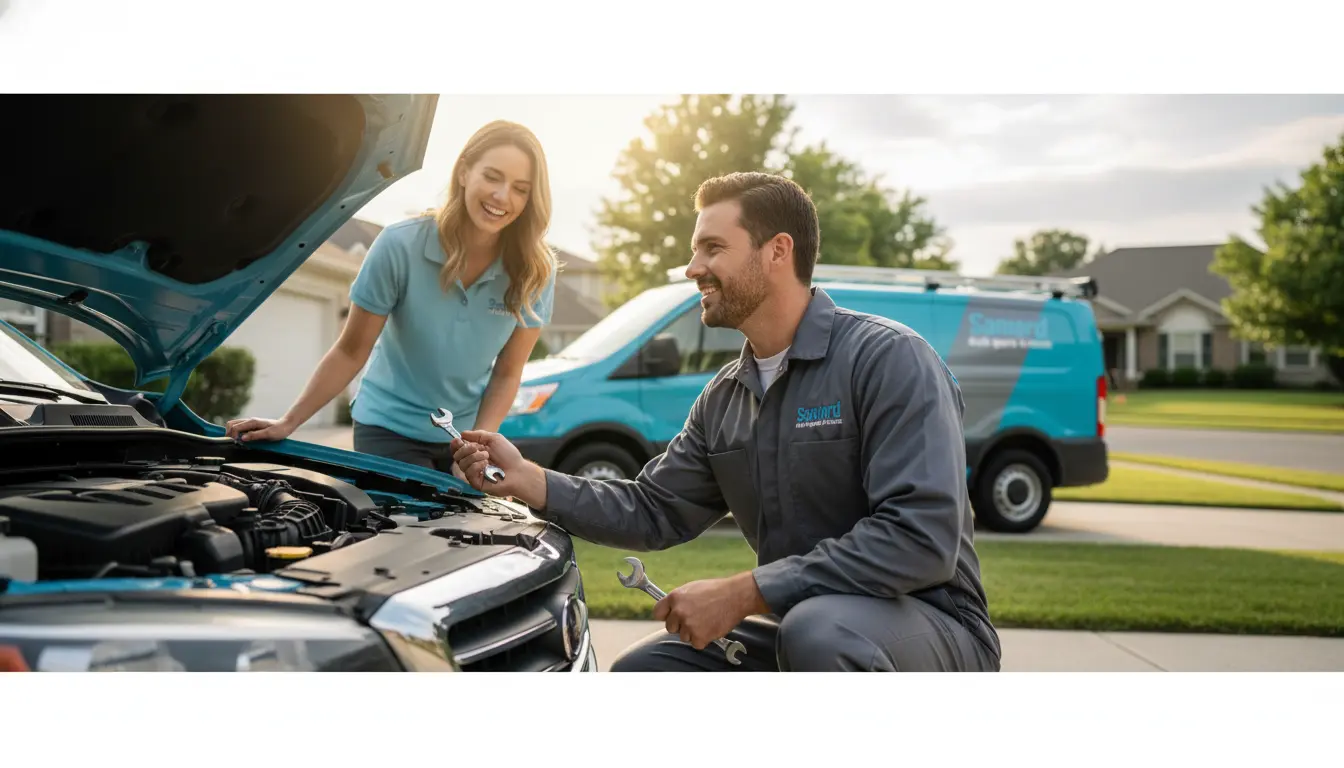
Operating passenger cars or commercial fleet units within Central Florida’s intense thermal zones requires strict attention to fluid life limits and mechanical clearances. Heavy traffic backup patterns along dense highway corridors increase heat retention, putting massive stress on factory cooling circuits. Setting up systematic diagnostic tracking protects primary internal combustion blocks from unexpected component failures or sudden roadside breakdowns.
Deconstructing Cross-Regional Infrastructure and Diagnostic Tracking
Evaluating mechanical needs between different service areas highlights the value of choosing facilities equipped with specialized diagnostic tool telemetry. Sanford Auto Repair & Service integrates advanced engine scans and physical data logging to capture hidden circuit faults before they impact daily operations. Fleet operators looking to review cross-regional mechanical solutions or analyze engine warning behaviors can view our 2026 data analysis on common car problems in Sanford.
Extreme local humidity shifts speed up fluid degradation, meaning vehicle owners must follow proactive flushing routines to protect delicate internal clearances. Using high-lubricity synthetic formulations preserves core bearing pathways, preventing accelerated metal fatigue despite severe stop-and-go driving loads. Car owners wishing to structure factory maintenance routines or analyze essential safety protection metrics can view our briefing index on the importance of regular maintenance.
Quantifying Thermal Sludge Defense and Radiator Scale Removal
Sustained cooling restriction loops caused by calcified scaling inside internal engine water jackets block normal heat transfer paths, causing rapid cylinder head shifting. Executing thorough chemical radiator flushes returns internal circulation pathways to original factory design specs, protecting the powertrain envelope from sudden thermal warp failures. Motorists dealing with sudden secondary road faults or needing fast roadside support can inspect our localized breakdown blueprint on emergency repairs.
Isolating Vacuum Line Cracking and Airborne Terminal Scale
Unmetered air breaching weathered intake manifold gaskets throws off the stoichiometric ratio, forcing the electronic management chip to run large fuel trim corrections that raise exhaust temperatures. Motorists must resolve minor vacuum line cracks immediately to stop advanced cylinder vibrations and prevent recurring warning lights. Business owners needing to coordinate multi-vehicle facility layouts or compare workspace designs can consult our commercial log at top 10 handyman services for Pompano Beach homes to align shop bay space.
Traversing deep standing water pools from seasonal downpours introduces water contamination risks if external moisture tracking reaches low-positioned differential or gearbox vent breathers. Concurrently, high atmospheric moisture triggers rapid galvanic crusting across copper terminal links, creating an artificial circuit resistance that strains alternator charging pathways. Vehicle owners seeking to track early circuit leakage patterns or locate hidden fluid pooling markers can check our electrical troubleshooting manual on 7 signs its time for electrical repairs in your home.
Enforcing Eco-Responsible Extraction and Calibration Protocols
Sanford Auto Repair & Service completes all mechanical maintenance, suspension corrections, and steering system alignments in absolute compliance with factory manual specifications. We implement eco-responsible fluid isolation and handle volatile automotive refrigerants with EPA-certified recovery machinery to fully protect regional water tables from chemical contamination. Adhering to these tight operational standards maintains vehicle driving reliability while actively protecting local ecosystem health metrics.
Frequently Asked Questions (FAQs)
At a standstill, the engine lacks the forcing effect of ambient oncoming airflow through the radiator fins. The cooling circuit depends entirely on the auxiliary electric cooling fans to pull heat away; if the fan motor drops efficiency, temperatures climb rapidly.
Glycol brake fluids possess strong hygroscopic traits, meaning they pull water vapor directly from the surrounding air. High ambient moisture saturation lowers the liquid’s boiling point, leading to hydraulic vapor locks and a spongy pedal feel during hard braking cycles.
Unmetered air leaks distort the engine’s air-fuel balance, creating a lean burn profile inside the combustion cylinders. The engine control unit overcompensates by injecting extra fuel, which often ignites late and burns inside the exhaust manifold, overheating the delicate catalyst core.
Metal grinding means the friction lining has worn away completely, leaving the raw iron backing plate to press directly against the cast rotor face. This metal-on-metal contact cuts deep gouges into the rotor surface, destroying the assembly and requiring total replacement.
When a hot transmission assembly hits cold standing water, the sudden temperature drop creates an internal vacuum loop. If the breather vent is submerged under water, it draws dirty road moisture straight into the fluid mix, ruining internal clutches.
Do not allow unmapped sensor errors or thermal fluid degradation to compromise the physical safety or long-term market equity of your vehicle asset. Safeguard your external mechanical assemblies against aggressive sub-tropical microclimates by scheduling a technical multi-point validation sweep today. Contact our skilled team to reinforce your vehicle envelope and secure absolute driving peace of mind.